
Choosing the right football helmet starts with accurate head measurement and a proper fit. This Football helmet sizing guide explains how to measure your head, use a helmet size chart, and check the fit before playing.
How to Measure Your Head for a Football Helmet
You can measure your head in a few simple steps:
- Use a flexible measuring tape.
- Place it around the widest part of your head, usually just above your eyebrows.
- Keep the tape level around the back of your head.
- Make sure the tape is snug without squeezing your head.
- Record the measurement in inches or centimeters.
- Measure twice to confirm the result.
Once you have your measurement, compare it with the official sizing chart for the specific helmet brand and model.
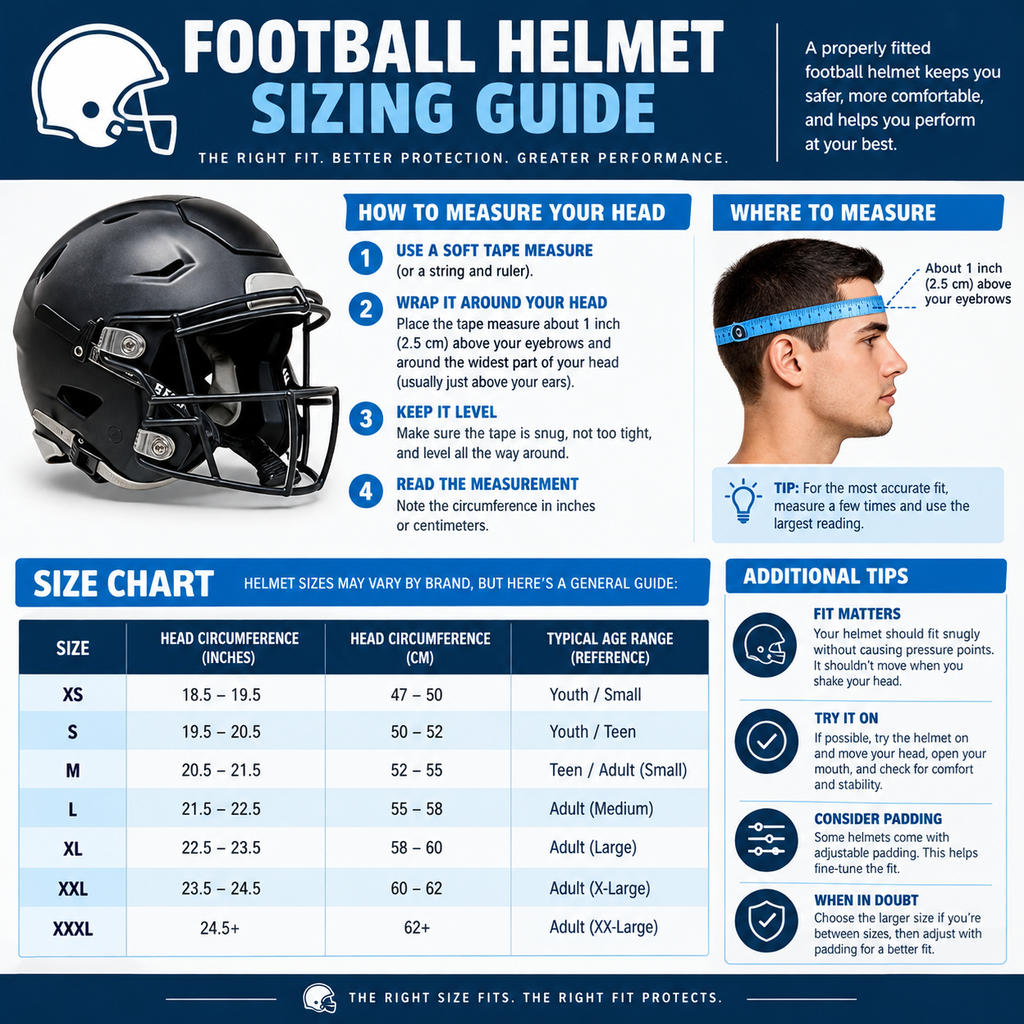
Football Helmet Size Chart
The following chart provides general sizing guidance:
| Helmet Size | Approximate Head Circumference |
|---|---|
| Small | 20–21 inches |
| Medium | 21–22 inches |
| Large | 22–23 inches |
| Extra Large | 23–24 inches |
Important: Helmet sizing varies between brands and models. Always use the manufacturer’s official sizing chart before purchasing.
How Should a Football Helmet Fit?
A properly fitted helmet should:
- Sit securely on the head.
- Remain stable during normal movement.
- Feel snug without painful pressure.
- Sit in the position specified by the manufacturer.
- Have the chinstrap properly secured.
- Allow the player to move comfortably.
A helmet that moves excessively or creates significant pressure should be reassessed for size and fit.
Adult Football Helmet Sizing
For an adult football helmet, start by measuring head circumference rather than choosing a size based on age or appearance.
The basic process is:
- Measure your head.
- Compare the measurement with the manufacturer’s size chart.
- Try the helmet on.
- Check for excessive movement or uncomfortable pressure.
- Adjust the helmet according to the manufacturer’s instructions.
- Secure the chinstrap.
Youth Football Helmet Sizing
Youth players should also be fitted according to their current head measurement and the manufacturer’s sizing requirements.
Don’t purchase an oversized helmet simply so a young player can “grow into it.” A football helmet should be appropriately sized and fitted for the player at the time it is used.
Common Football Helmet Sizing Mistakes
Avoid these common mistakes when choosing a helmet:
- Guessing your size: Measure your head first.
- Buying too large: Don’t size up simply for future growth.
- Using age alone: Head circumference varies between players.
- Ignoring brand differences: Sizing can vary by manufacturer and model.
- Ignoring head shape: Two helmets with similar measurements may fit differently.
- Skipping the fit check: Always check how the actual helmet sits and moves.
Football Helmet Accessories and Football Accessories
Once you’ve selected the correct helmet, the right accessories can help complete your football set
- Football Accessories – football gear, equipment, and accessories.
- Helmet Accessories – compatible helmet add-ons and replacement accessories.
Football Helmet Sizing Checklist
Before purchasing or using a helmet, check:
- ✓ Head circumference measured correctly
- ✓ Manufacturer’s size chart checked
- ✓ Correct helmet size selected
- ✓ Helmet tried on
- ✓ Helmet sits correctly
- ✓ No excessive movement
- ✓ No significant pressure or discomfort
- ✓ Retention system adjusted
- ✓ Chinstrap secured
- ✓ Manufacturer’s instructions followed
How Do You Know if a Football Helmet Is Too Small?
A helmet may be too small if it creates significant or persistent pressure, causes discomfort, or cannot be positioned correctly.
If the helmet feels painfully tight, reassess the size and fit rather than simply forcing it into position.
How Do You Know if a Football Helmet Is Too Big?
A helmet may be too large if it moves excessively or cannot be adjusted securely.
Don’t rely on tightening the helmet as much as possible to compensate for an incorrect size. Check the manufacturer’s fitting instructions and consider whether another size or model is appropriate.
Does Football Helmet Size Affect Safety?
Proper sizing and fit are important parts of using a football helmet correctly. However, helmet size is only one consideration.
Players should also follow the manufacturer’s instructions, use a properly maintained helmet, and follow applicable football equipment and safety requirements.
Frequently Asked Questions
How do I measure my head for a football helmet?
Use a flexible measuring tape around the widest part of your head, generally just above the eyebrows and around the back of the head. Record the measurement and compare it with the manufacturer’s official sizing chart.
What football helmet size do I need?
Your helmet size depends on your head circumference and the specific helmet model. Always check the manufacturer’s sizing chart before purchasing.
Is a 22-inch head a medium or large helmet?
It depends on the brand and model. A 22-inch measurement can fall into different size ranges, so use the manufacturer’s specific chart.
Should a football helmet feel tight?
A helmet should feel secure and properly fitted without causing significant or painful pressure. Follow the manufacturer’s fitting instructions.
Should I buy a larger helmet for a growing child?
No. A youth football helmet should be appropriately sized for the player’s current head measurement and fitted according to the manufacturer’s requirements.
Do football helmet sizes vary by brand?
Yes. Different manufacturers and helmet models can use different sizing systems, shapes, and fit characteristics.
How often should I check football helmet fit?
Check the fit regularly, particularly before a new season, after significant growth, or whenever the helmet begins moving excessively or feeling uncomfortable.
What football helmet accessories do I need?
Available accessories vary by helmet model. Check that any accessory is compatible with your specific helmet and follow the manufacturer’s instructions for installation and use.
Final Thoughts
Choosing the right helmet begins with an accurate measurement and a proper fit. Measure your head, check the manufacturer’s sizing chart, try the helmet on, and make sure it remains secure and comfortable.
Use this Football helmet sizing guide whenever you’re selecting a new helmet or checking the fit of an existing one.